Link
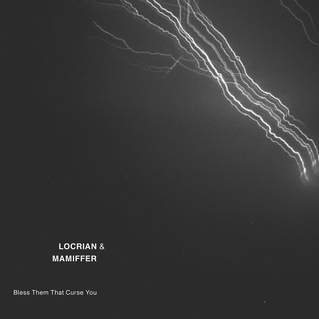
here. Territories, the new album by experimental Chicago duo Locrian, is a kaleidoscope of grays and black, where suffocating sustains and piercing feedback swirl deliberately with crippled blastbeats and mangled shouts. For several years, the music of André Foisy and Terence Hannum-- who first played together in the quartet Unlucky Atlas, with their wives-- consisted largely of dark, mesmeric drones, made menacing by Hannum's lacerated roar and noise textures. This time, they recruited a tell-tale list of collaborators-- Nachtmystium's Blake Judd, Yakuza's Bruce Lamont, Bloodyminded's Mark Solotroff, and Velnias' Andrew Scherer-- from the worlds of electronics and metal to, in effect, darken their darkness.
And so, Territories plays like a study in both instability and intensity: The album's centerpiece, for instance, is called "Procession of Ancestral Brutalism." An 11-minute, feedback-and-static-damaged black metal marathon, it teeters constantly on the brink of auto-destruction, a system bound for sudden failure. That's appropriate for an album that builds so heavily on themes of accidental ruination, where humans force themselves into scenarios that render doomsday outcomes.
Foisy and Hannum both work at Columbia College in Chicago, where they teach at night and assist with student development and long-term university planning by day. Despite the malevolence of their music and, to an extent, the despondency of their world views, they spoke candidly and humorously about their musical development, Locrian's creative process, and the premonition that we've got some troubling days ahead.
MP3:> Locrian: "Ring Road"MP3:> Locrian: "Procession of Ancestral Brutalism"Pitchfork: Where did you come to Chicago from?
André Foisy: I lived in Buffalo, but I'm from northern New York state, near the border of Ontario and Quebec-- kind of in the middle of nowhere, the northern Adirondack Mountains. It's about an hour's drive to Montreal.
Terence Hannum: I came from Florida. I moved here pretty much as soon as I finished college.
Pitchfork: I grew up in a rural town in North Carolina, so I always wonder about how people who came from similarly somewhat isolated areas found their way into a musical world bigger than that of their classmates. Modern country, for instance, ruled my school.
TH: For me, it was my dad. Whenever I said I liked something-- he still does this to this day-- my dad would say, "Well, that was done in the 60s," and he will pull out some record-- Alice Cooper, Black Sabbath, whatever. I quickly kind of realized that most of the crap in the late 80s that was being fed to my demographic was just that-- crap.
So it was a gateway. You start listening to Black Sabbath, and you start wondering, "What's heavier? What's around now?" You might get into Metallica, and I think it was quick into punk and underground, self-made music that, in the D.C. area, was pretty easily accessible even when I was 10 or 11.
AF: I got interested in different music when I was in my early teens. The strange commonality that Terence and I share [is] we had a shared background in what used to be the hardcore scene. Growing up in northern New York, I didn't love that place-- or everything about that place. I didn't identify with a lot of the people I went to school with or were around those communities. I would try to get out of northern New York as much as possible, so I'd be going to shows in Ottawa or Montreal and seeing bands that Terence and I really bonded over-- like One Eyed God Prophecy and Ire.
TH: [Union of] Uranus...That pathway led into the 90s, where hardcore and the youth culture of that time was still kind of active-- pre-Internet-- and creative. Not everything was handed to them, and people had to generate these interesting networks. Most of those bands that André mentioned were around an area or a record label. You'd get one 7", and you can get the next one and you'd be like, "All, right this is a scene! It kind of has a sound! It's kind of dark…"
Pitchfork: That seems to relate to your discography, which is pretty diffuse-- LPs, CDs, 7"s, 3" CDs, eight-tracks, tapes. Is that a pretty conscious homage to that scene, a direct continuation of it?
TH: Maybe subconsciously. I've always listened to vinyl, and I've always collected vinyl. I don't buy CDs. I've always made tapes. I've never not made tapes. I was looking back, and every year, I've made some kind of tape. I've always made a cassette, since I was 14 or whatever, of my own music.
AF: Growing up, the ultimate thing-- if your band was cool-- was you got to release a CD. That was better than an LP even though, with an LP, the artwork looks cooler. I guess there's just never been this happy medium with me. I don't feel like there's any format that's perfect for anything.
We're finishing a CD right now, and we're playing with a percussionist, Steven Hess. He's got his drums tuned to this frequency that's really, really low, and you can't hear them on certain speakers. That frequency is going to come off perhaps better on CD, even though I like that format a lot less. It tends to have a better bass response than vinyl, even though there are certain nuances on that record that are going to sound a lot better on vinyl.
With MP3s, they're good for some things, but as far as giving the artists control, it's not very good. We're not going to be able to control who hears this new record: People are going to be listening to it on their computer speakers, and they're going to be missing a big section of it because the frequencies won't work on those speakers. Or even on Territories, some frequencies are not going to work on those computer speakers. Some of those are pretty abrasive frequencies, so maybe some people are thankful for that.
Pitchfork: Collaboration is somewhat new for Locrian. At what point did you decide that was where you wanted to head next?
AF: We've been playing together for a few years, and I think we felt comfortable as a duo. That definitely made us more open. In the noise scene, it's like everyone collaborates all the time, and there are a whole lot of collaborative splits, all this stuff. Some of them are great, and some of them are total duds. I think we were really wary of making a dud-- or overdoing it, like where you have a "CD-R leak" of some collaboration that you've done. Not to disparage that, it's just that we really wanted it to make sense and not be just because everybody else was doing it.
Pitchfork: You said "noise scene." On Territories, you play with noise and metal musicians, and I think this record will find laurels and criticisms on both sides. Where do you consider yourself?
AF: This project has always been an avenue where Terence and I explored a bunch of common interests and both of our common interests in music are so-- I think there's definitely a unity to them, but it's also all over the place. For instance, we're both into Krautrock or more experimental stuff-- early-90s death metal.
TH: A lot of our motivations when we started dealt with our frustrations at that time. There was no Kuma's Corner in Chicago [a metal-themed burger joint-- Ed.]. Any metal scene was really small and really marginal.
AF: I think we both felt there was this provinciality to the music scenes we were around-- that's still prevalent. You think about, I don't know, Earache. Earache used to be a record label that would put out some really challenging stuff, and then they kind of stopped.
TH: Not just them, specifically. When you think of someone like Earache, or Relapse, you think, "Wow, that record, when I was a teenager, was really challenging." You look back, and it still holds up as an intense record with its subject matter, its speed, its aggressiveness, or whatever. And then you kind of listen to what they're doing now, and it's like, "What are they doing?"
There was this momentum, this creativity, this kind of feeling that you're pushing boundaries. In a similar way, we looked at Chicago and the metal thing, and maybe that's why we gravitated to people like Blake and Bruce and people we felt were trying to challenge that scene. Nachtmystium's Instinct: Decay-- I still put that record on. I think it's brilliant. I think the guitar playing's really amazing, really dense. It kind of begins to transcend that black metal tag in a positive way. Likewise, Bruce, with Yakuza.
That was a reaction that we had, that it was a small enough scene and there weren't enough people really pushing things. Now I think the metal scene is a lot healthier and the same thing with the noise scene. It was much more marginalized, pre-Wolf Eyes on Sub Pop. I think kind of post-Wolf Eyes on Sub Pop, it's gotten really big. Everyone has a band and a tape label, and now this healthy process has happened where some really solid musicians are coming out and are doing really interesting things with noise and power electronics and experimental music.
AF: If you have people from the metal audience who are picking up this record, I hope they're listening to the non-black metal tracks. I hope they are kind of taken aback. We have these more direct parts on this record, but both of us are like, "We should make people wait to get to those direct parts, really kind of suffer." If anyone's picking up this record because they read that Blake from Nachtmystium's on it, they're going to have to wait through some…
TH: Some ambient stuff. I think there will still be some middle passages, I think, that can act as some kind of a buffer, a purgatory or whatever. I'm really proud of those passages.
Pitchfork: That's a concept I've always loved-- putting a litmus test up front, to see who's really into the record for the long haul. What's the downside of that, though?
TH: People are going to like what they like. There's plenty of white guys playing guitars and making pop music that you can listen to. When we play live, there's a lot of other things we have to think about and consider. A lot of times, when we play live, we start out pretty low key because we have to build up a lot of stuff normally, especially if we're playing just the two of us. We have to build up a lot of loops and brin g in other instruments.
Our key phrase to each other is "take our time." We like to take our time, especially with a live set, and we spent two years or so before we went into the studio to record something. Most of our recordings from before then were from live or radio shows. Pacing and timing were really important. Whether to draw someone in, like a story or narrative of some kind, I think that's a common thing in our releases. Maybe that would give people more patience.
Pitchfork: The song titles on Territories seem very deliberate, maybe even didactic, in relating to structures-- barrows, roads, columns-- and decay. Are song titles a convenient way for experimental acts to convey a message?
TH: They're all kind of based off of architectural descriptions and this kind of bleak world. There was this architectural movement, the New Brutalism movement, and that was a really big influence, all of their ideas. The whole first song came from this screed from the 19th century, in England, about industrialization. I thought it was really poetic when you kind of edited it down-- things hadn't changed that much. I really doubt most progress. I think that's really behind a lot of the lyrical content of the record, this doubt of this direction. Both André and I were kind of raised around hardcore music that felt that they had all the answers and kind of whacked you over the head all the time with…
Pitchfork: A message?
TH: How to fix your life and judge everybody else's lives and all that great stuff. I think we reacted to that. Maybe it made us more cautious about some kind of stance or something like that. That's what U2's for.
AF: Yeah, and all those ranting about ways to change your life and fix the world. They're like, "Hey, I'm going to go vegan, and that's going to make the world better!"
Pitchfork: You could argue it's the same, in a way, as religion. It's something that makes you think that tomorrow will be better, that there is progress.
AF: It's just that we live in a very disturbing world. The fact that we're putting out vinyl records that are extremely pollutive to the environment, that's a contradiction I think about when we release records. I think, "Oh, we're causing some pollution, but at least it's limited to an extent." We're both trying to grapple with maybe that hardcore scene we were part of that gave us the answers but disturbed us and made us more critical of things, maybe more cynical. Maybe part of our output is finding a balance in that. Maybe it's our way of trying to deal with that cynicism.
TH: I'm also totally comfortable with the fact that the human race will cease to exist at some point, probably because of its terrible decisions. I'm okay with that now. And I don't really have much hope that we're going to turn things around in some way. Our tendencies to self-correct, we've kind of marked ourselves out of any way that we're actually going to right that course. The idea that we can is really funny to me, that we have any say in how this planet functions. We can certainly affect it, but it was here before we were here, and it'll be here after we're here. It'll regenerate in some way. I know it's fatalism. I don't really have much hope for humanity, I guess. Sorry. -- Grayson Currin